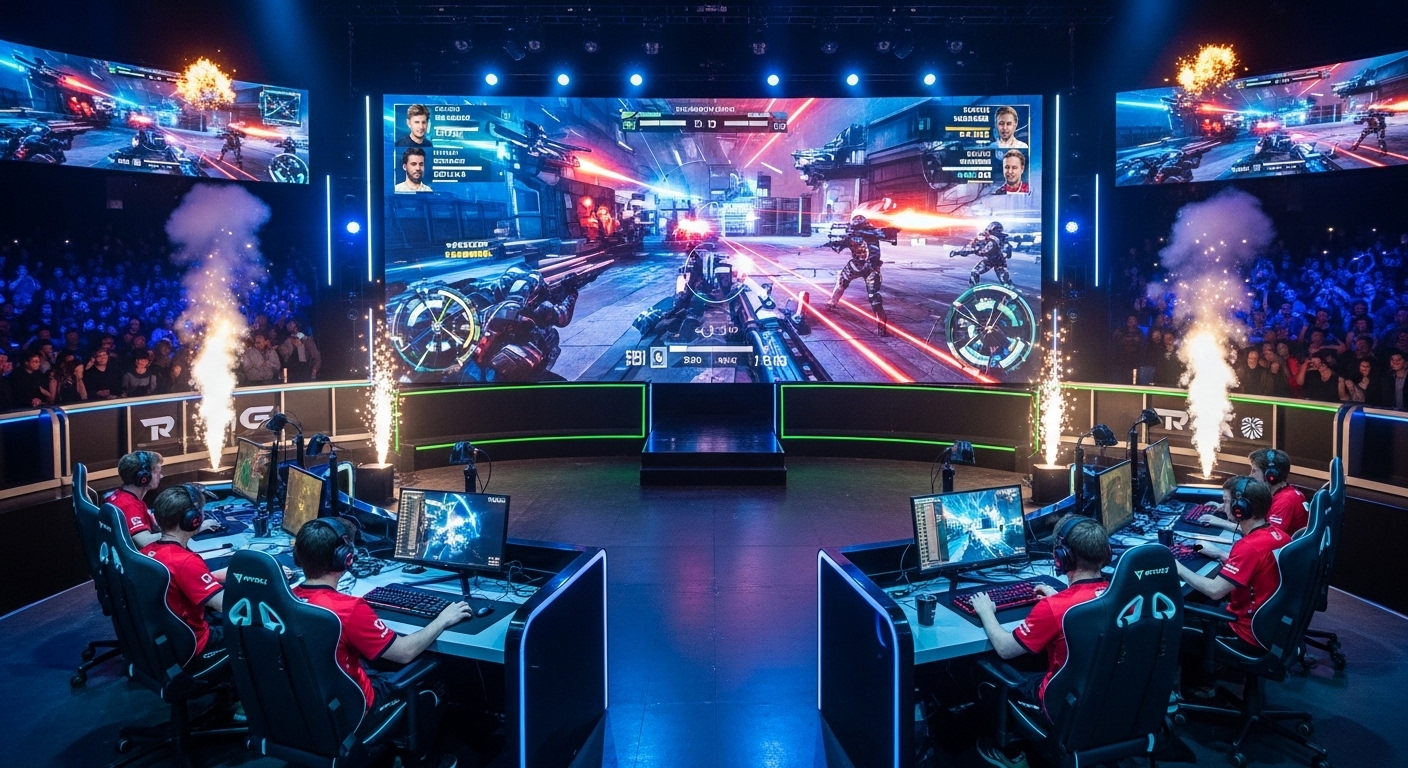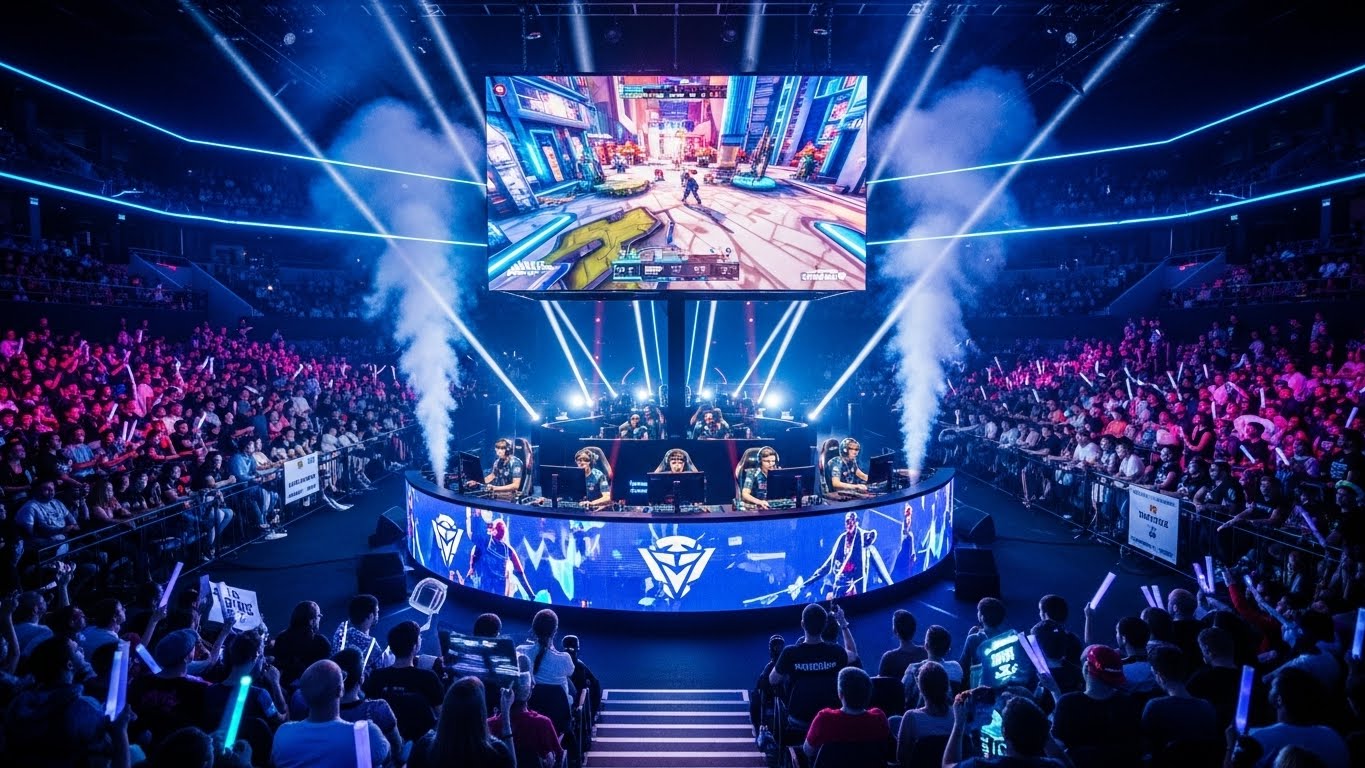
Esports, once a niche subculture, has evolved into a global powerhouse in the world of entertainment and competition. From humble beginnings in the form of local LAN tournaments to being broadcasted on mainstream platforms, esports has grown into a multi-billion-dollar industry. This meteoric rise not only signals a shift in how we perceive traditional sports but also highlights the changing dynamics of entertainment, technology, and global connectivity.
What is Esports?
Esports, short for electronic sports, refers to competitive video gaming at a professional level. Players, often part of organized teams, compete in various video game titles across genres such as real-time strategy (RTS), first-person shooters (FPS), multiplayer online battle arena (MOBA), and sports simulations. These competitions are frequently organized into tournaments, often with substantial cash prizes, sponsorships, and broadcasting deals. Esports tournaments are sometimes held in massive arenas with live audiences and can also be streamed online to millions of viewers.
Games such as League of Legends, Dota 2, Fortnite, Call of Duty, and Counter-Strike: Global Offensive are just a few examples of the high-stakes titles in the esports ecosystem. The appeal of esports lies not only in the thrilling competition but also in the community that has grown around it. This includes the players, coaches, analysts, streamers, fans, and content creators who make the scene vibrant and engaging.
The Evolution of Esports
The Early Days: A Grassroots Movement
The origins of esports can be traced back to the late 1990s when competitive gaming began to gain traction through local tournaments and events. Games like Quake, StarCraft, and Warcraft III were among the first titles to foster competitive communities. However, it wasn’t until the early 2000s that esports truly began to take shape. Platforms like Battle.net and World Cyber Games (WCG) helped establish competitive frameworks and global tournaments.
Esports at this point was still very niche. Gamers participated mostly for fun or out of passion for their favorite games. The prizes were often small, the audiences were limited, and the production value of tournaments was minimal. However, a passionate group of early adopters, mostly players and fans, laid the foundation for what would eventually become a global phenomenon.
The Explosion of Online Streaming and Sponsorships
One of the pivotal moments in the growth of esports came with the rise of online streaming platforms like Twitch, which launched in 2011. The ability to broadcast live gameplay and interact with viewers brought a new dimension to the competitive gaming scene. For the first time, fans could watch tournaments in real-time, engaging with their favorite players and teams as they played.
As the viewer base grew, so did the opportunities for monetization. Streamers began to make money from ad revenue, donations, and subscription models, allowing many to turn their passion for gaming into full-time careers. Esports organizations also benefited from sponsorships, which helped fuel the expansion of tournaments and player salaries. Large tech companies, gaming hardware brands, and even traditional sports teams recognized the potential of esports as a lucrative investment.
The Mainstream Breakthrough
By the mid-2010s, esports began to receive recognition from mainstream media and traditional sports. Esports events were being broadcast on major television networks, with networks like ESPN airing live tournaments. This visibility marked a shift in the perception of esports, transforming it from a niche hobby to a legitimate sport.
Tournaments like The International (the world championship for Dota 2) began offering multi-million-dollar prize pools, attracting top-tier talent and a global fan base. The League of Legends World Championship, another major event, regularly pulls in millions of viewers online, further solidifying the global reach of competitive gaming.
Today, esports boasts professional leagues, multi-million-dollar sponsorships, and players who make six-figure salaries from tournament winnings, streaming, and endorsements. Esports has become a full-fledged industry with its own set of rules, career opportunities, and a large and dedicated fan base.
The Esports Ecosystem
Professional Teams and Leagues
Esports operates much like traditional sports leagues, with professional teams competing in leagues and tournaments. Some of the biggest organizations include Team Liquid, Cloud9, T1, and Fnatic. These teams often recruit top players from around the world, and players may sign contracts that include salaries, bonuses, and prize earnings.
In some cases, esports teams are even backed by traditional sports organizations. For example, the NBA’s Miami Heat owns an esports team called Misfits Gaming, and Manchester City has its own esports division. This convergence of traditional sports and esports further legitimizes the latter as a serious competitive domain.
The competition within these leagues is fierce. Players and teams are constantly improving their skills, developing new strategies, and adapting to updates in the games they compete in. This level of dedication and professionalism has transformed esports into a highly organized, fast-paced, and strategically intricate environment.
Broadcasting and Content Creation
Streaming platforms like Twitch, YouTube, and Facebook Gaming have played a crucial role in the growth of esports. These platforms allow fans to watch live gameplay, interact with players, and be part of the action. Some esports tournaments have even moved to traditional broadcasting channels, while others have exclusive streaming deals with platforms like Twitch.
Content creation goes beyond just streaming games. Many professional players, coaches, and analysts also create YouTube channels or other forms of content to engage with their fans. These creators often post tutorials, behind-the-scenes footage, interviews, and highlights from major tournaments.
Esports has become an entertainment medium in its own right, with some players amassing millions of followers on social media platforms. Many fans are not just watching the games—they’re becoming part of the community and following the personal stories of their favorite players. This unique intersection of gaming, social media, and broadcasting has created a new form of interactive entertainment.
The Role of Sponsorships and Advertising
Sponsorships play a major role in the growth and financial viability of esports. Companies from various industries are eager to tap into the large, dedicated audience of esports fans. Brands like Intel, Nike, Red Bull, Coca-Cola, and Mercedes-Benz have all partnered with esports teams, events, and players, integrating themselves into the ecosystem.
These sponsorships not only provide financial support for the industry but also introduce esports to a wider audience. They also open up opportunities for players and teams to earn a living beyond just tournament winnings. Sponsorship deals include everything from branded team jerseys to exclusive product endorsements.
Esports Betting
Another rapidly growing aspect of esports is esports betting. Similar to traditional sports, fans can place bets on their favorite teams or players in major tournaments. Esports betting is legal in some regions and has become a multi-million-dollar industry in its own right. With major tournaments being broadcast live, betting sites provide real-time odds, allowing fans to participate in the action in a more interactive way.
Esports and Its Cultural Impact
Esports has done more than just change the landscape of gaming—it has also had a profound cultural impact. It has introduced gaming as a form of serious competition, paving the way for gaming to be recognized as a legitimate career choice. Parents who once discouraged their children from playing video games now see the potential for their children to build a career in esports, as players and content creators.
The global reach of esports has also brought together fans from different parts of the world. Whether it’s a League of Legends match in South Korea, a Fortnite tournament in the United States, or a Dota 2 championship in Germany, esports has become a shared experience for people from diverse backgrounds. It’s an opportunity for cross-cultural exchange, where people unite over a shared passion for gaming.
Furthermore, esports has helped change the way we think about competition. Traditional sports often focus on physical prowess, but esports allows for intellectual and strategic prowess to shine. Players must have an exceptional understanding of the game, reflexes, communication skills, and the ability to work in a team—all while competing at the highest level of intensity.
The Future of Esports
As esports continues to grow, the future looks bright. The industry is poised to reach even greater heights, thanks to advancements in technology, global connectivity, and the continued rise of digital media. Virtual reality (VR) and augmented reality (AR) are likely to play a role in the next evolution of competitive gaming, offering new experiences and possibilities for both players and fans.
Esports will also continue to integrate with traditional sports. We are already seeing esports competitions held in major stadiums and arenas, with massive crowds in attendance. It’s not inconceivable to imagine esports being included in the Olympic Games in the future, marking the ultimate recognition of competitive gaming as a global sport.
In the next decade, esports will likely become a staple in entertainment, just like traditional sports, with players, teams, and organizations becoming household names. The integration of esports into everyday culture is inevitable, and its influence will likely stretch far beyond the world of gaming.
Conclusion
Esports has come a long way from its grassroots beginnings. Today, it’s an industry worth billions, with millions of fans and an ever-growing number of players pursuing careers in gaming. As it continues to evolve, esports is reshaping how we view entertainment, competition, and even professional careers. With its global appeal, massive fan base, and potential for innovation, the future of esports looks brighter than ever.