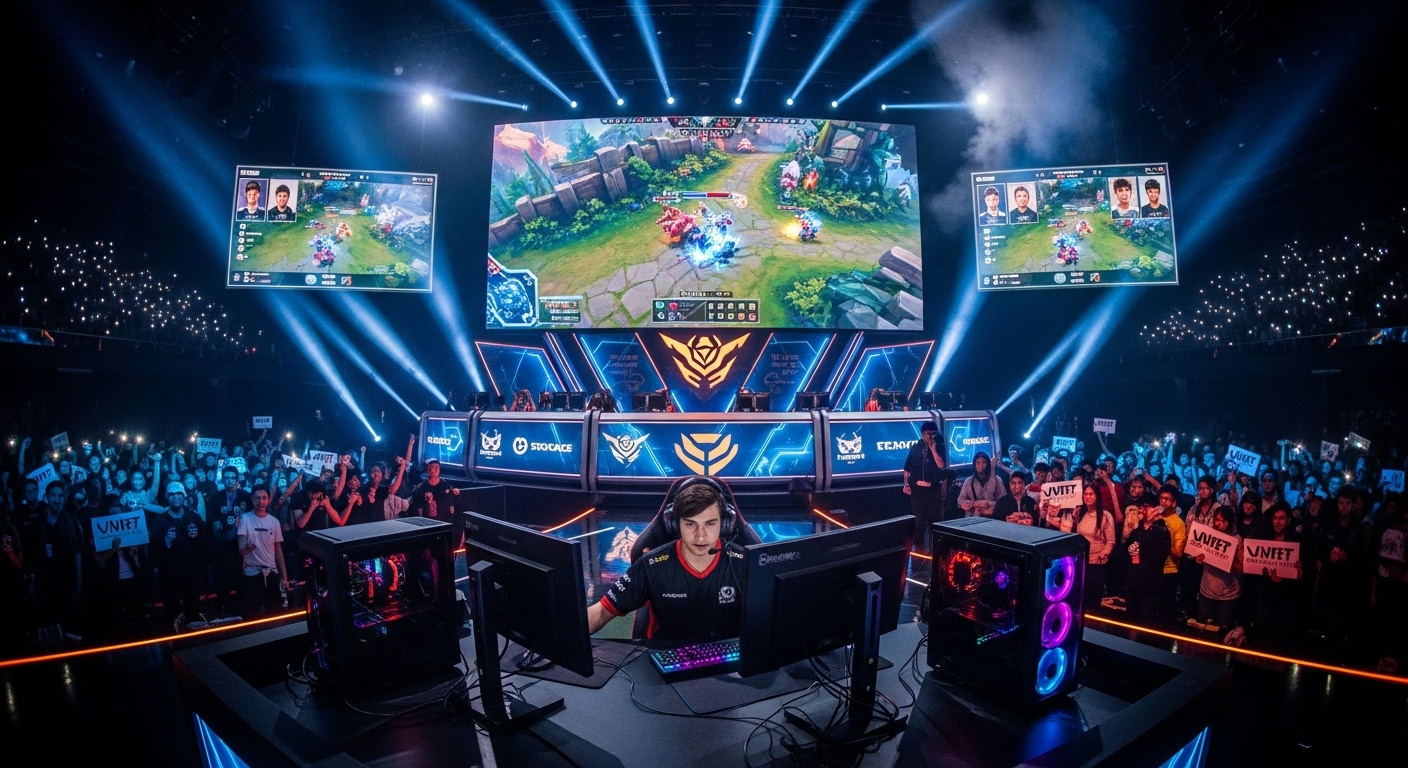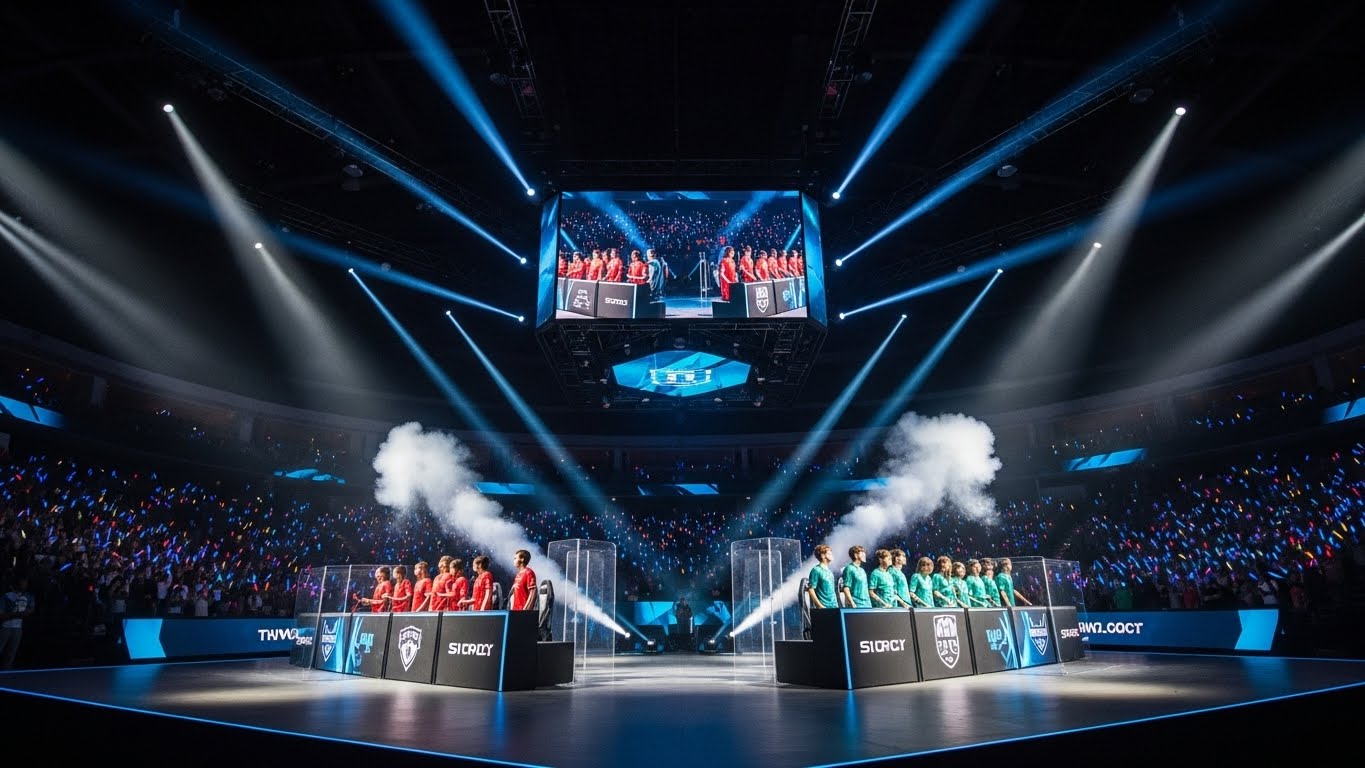
In the last decade, esports has evolved from a niche subculture into one of the fastest-growing industries in the world. What was once considered a pastime for a small group of passionate gamers is now a global spectacle, attracting millions of fans, massive sponsorship deals, and even mainstream media coverage. In this post, we’ll dive into the world of esports, exploring its rise, its impact on entertainment, and what the future holds for this digital revolution.
The Origins of Esports: From Arcade to Arena
Esports has roots that go back to the 1970s and 1980s when early arcade games like Pong and Space Invaders began to spark competitive play. However, it wasn’t until the late 1990s and early 2000s that esports began to take shape in the form we recognize today. Games like Quake, StarCraft, and Warcraft set the stage for competitive gaming, with local LAN (Local Area Network) parties acting as the foundation for small-scale tournaments. These grassroots events allowed gamers to come together and showcase their skills, but they remained largely underground, with limited exposure outside of tight-knit gaming communities.
It wasn’t until the first major tournament in 1997, the Red Annihilation tournament for Quake, that esports began to receive serious attention. It was a humble affair compared to today’s global competitions, but it proved that there was a demand for organized competitive gaming. From there, the esports scene began to slowly grow, fueled by the rise of internet gaming platforms, where players could compete against others from all over the world.
The Surge in Popularity: A Global Movement
By the late 2000s, esports began to gain traction. Games like StarCraft II, Counter-Strike, and League of Legends not only attracted millions of dedicated players but also gave birth to massive online communities and streaming platforms. The launch of Twitch in 2011 was a game-changer for the industry, as it provided a place for viewers to watch live gameplay, interact with players, and become a part of the competitive gaming scene from the comfort of their own homes.
Esports began to reach a tipping point in the early 2010s. Major tournaments like The International (Dota 2) and League of Legends World Championship attracted millions of viewers and offered multi-million-dollar prize pools. In addition to the large fanbases surrounding these games, the involvement of sponsors like Coca-Cola, Intel, and Audi helped legitimize esports as a mainstream form of entertainment. Major media outlets like ESPN also began broadcasting esports tournaments, signaling the growing acceptance of competitive gaming in the world of sports and entertainment.
The Esports Ecosystem: Beyond Just Players
One of the defining characteristics of esports is the complex ecosystem that has developed around it. No longer is it just about players competing in tournaments; esports has become a global industry with a range of professionals filling different roles. Teams now employ coaches, analysts, team managers, and even psychologists to help players perform at their peak. The growth of esports has also created numerous career paths in event management, broadcasting, marketing, and content creation.
The organizations that manage esports teams, such as Team Liquid, Cloud9, and FaZe Clan, play an essential role in the structure of competitive gaming. These organizations function much like traditional sports teams, with dedicated management and support staff. Players sign contracts, negotiate sponsorships, and travel to international tournaments, just like professional athletes in other sports.
Meanwhile, streamers have become some of the biggest celebrities in the esports world. Influencers like Ninja, Shroud, and Pokimane have transcended gaming to become household names, with millions of followers across social media platforms. They generate income not only through sponsorships and advertisements but also through direct fan donations and subscription services on platforms like Twitch.
The Economics of Esports: A Multi-Billion-Dollar Industry
The economics of esports are staggering. In 2024, the global esports industry is expected to generate over $1.5 billion in revenue, a figure that includes sponsorships, advertising, media rights, ticket sales, and merchandising. The increase in revenue has led to an influx of investments from major companies and venture capitalists, signaling a continued belief in the future potential of esports.
Sponsorship deals are among the biggest drivers of revenue. Companies like Intel, Coca-Cola, and Red Bull sponsor tournaments, teams, and players, recognizing the immense reach esports has among younger, tech-savvy audiences. Additionally, prize money for tournaments has skyrocketed, with events like The International offering prize pools upwards of $40 million, making it one of the richest events in any sport.
Esports has also made its way into betting and fantasy leagues, with fans able to wager on matches just like traditional sports. Esports betting is becoming an increasingly popular form of entertainment, further blurring the lines between traditional sports and digital gaming.
The Future of Esports: What Lies Ahead?
As esports continues to grow, it’s clear that the future of competitive gaming is bright. Technology will play a massive role in the next phase of esports, with the potential for virtual reality (VR) and augmented reality (AR) to revolutionize the way we experience gaming. 5G networks will also enhance live streaming experiences, making it possible to stream high-quality content with minimal latency and interruptions.
Another key trend is the rise of mobile esports. With smartphones becoming more powerful and affordable, mobile gaming has exploded in popularity, especially in regions like Southeast Asia, where mobile games like PUBG Mobile and Free Fire have created massive competitive scenes. As mobile esports grows, it opens up new opportunities for players and fans alike, particularly in countries with less access to high-end gaming PCs and consoles.
Furthermore, esports is becoming increasingly integrated into educational institutions. Universities and high schools across the globe are offering scholarships for esports players, and some are even building dedicated esports arenas. These programs not only provide students with a pathway to professional careers but also encourage the development of skills in digital media, event planning, and game design.
Esports’ integration with traditional sports is also likely to deepen in the coming years. We are already seeing collaborations between esports leagues and sports organizations like the NBA, NFL, and soccer clubs. These partnerships could lead to hybrid events that combine the excitement of traditional sports with the digital allure of esports.
Conclusion: The Esports Revolution
Esports has transformed from a niche activity to a global entertainment powerhouse. With millions of players, fans, and professionals involved, it has become a multi-billion-dollar industry that shows no signs of slowing down. The convergence of technology, media, and entertainment has created a dynamic ecosystem that is shaping the future of both gaming and sports.
Whether you’re a competitive player, a passionate fan, or just someone curious about this digital revolution, esports is undoubtedly here to stay. With new technologies, larger audiences, and more opportunities for growth, the next decade promises to be an exciting time for esports and its ever-expanding global community.