Introduction: The Digital Revolution of Competition
In the last few decades, few phenomena have captured the imagination of youth and reshaped entertainment culture like Esports. What began as casual gaming between friends has evolved into a multi-billion-dollar global industry, uniting millions of fans across continents. From local internet cafés to world stages filled with roaring crowds, Esports has become the modern gladiatorial arena — where skill, strategy, and split-second reflexes define champions.
Esports isn’t merely about playing video games competitively; it’s a new kind of sport altogether. It combines the intensity of traditional athletics with the limitless creativity of digital worlds. Today, Esports tournaments are streamed to millions, professional gamers are treated like celebrities, and brands invest heavily to tap into this ever-growing ecosystem.
The Humble Origins of Esports
Before the bright lights and million-dollar prizes, Esports had a far simpler beginning. The roots of competitive gaming date back to the early 1970s, when students at Stanford University competed in “Spacewar!”, one of the earliest digital games. The winner took home a year’s subscription to Rolling Stone magazine — a small prize compared to modern standards, but a symbol of what was to come.
As technology advanced through the 1980s and 1990s, arcade competitions and LAN parties began shaping gaming culture. Titles like Street Fighter II and Mortal Kombat turned local arcades into battlegrounds. Later, the rise of home computers and the internet allowed players to challenge opponents across the world without leaving their rooms.
The late 1990s marked a turning point. Games like StarCraft, Counter-Strike, and Quake became staples of competitive play. South Korea, in particular, became a global leader in organized gaming, establishing the foundation for Esports as a professional pursuit. Players began training full-time, sponsors emerged, and television channels even began broadcasting tournaments.
The 2000s: The Birth of Modern Esports
The early 2000s were a golden era of formation and experimentation. Internet speeds improved dramatically, making online multiplayer gaming a mainstream reality. Esports began to take shape with the introduction of organized leagues and international tournaments.
Counter-Strike 1.6, Warcraft III, and Dota (Defense of the Ancients) became defining games of the decade. Professional teams formed with coaches, managers, and analysts, mirroring traditional sports structures. Online streaming platforms like Twitch and YouTube Gaming later transformed the Esports landscape entirely, giving fans instant access to matches and player personalities from around the world.
By the end of the 2000s, Esports had developed its own ecosystem: dedicated arenas, sponsorship deals, commentators, and massive audiences.
The 2010s: The Era of Explosive Growth
The 2010s can be described as the decade when Esports went from niche to mainstream. Titles like League of Legends, Dota 2, Overwatch, and Fortnite drew in millions of active players and even more spectators. Major tournaments began offering multi-million-dollar prize pools, and Esports athletes achieved celebrity status.
The League of Legends World Championship became a global spectacle, filling entire stadiums and attracting more viewers than some traditional sports events. The Dota 2 International broke records year after year with fan-funded prize pools reaching tens of millions.
What truly accelerated this rise was streaming culture. Platforms allowed gamers not just to compete but also to connect directly with their fans. Personalities like Ninja, Faker, and s1mple became household names, influencing millions through their playstyles, discipline, and charisma.
Esports was no longer just about competition — it was about community, culture, and content creation.
The Globalization of Esports
One of the most fascinating aspects of Esports is its truly global nature. Unlike traditional sports, which are often limited by geography, Esports transcends borders entirely. Whether in Seoul, Los Angeles, Berlin, or Shanghai, fans and players connect through shared passion for their favorite games.
Regional differences do exist — with Asia leading in professional organization and infrastructure, Europe dominating strategy-heavy games, and North America thriving in content-driven Esports — but all regions contribute to the ecosystem in their own way.
Countries have started recognizing Esports as official sports, offering visas for professional players, and even discussing inclusion in future Olympic Games. Colleges and universities have also joined the movement, providing Esports scholarships and building competitive teams.
The result is a global cultural movement that unites people regardless of language, race, or nationality.
The Professional Scene: Life as an Esports Athlete
Behind every successful Esports player lies a story of dedication, strategy, and endurance. Professional gamers often train for eight to twelve hours a day, refining their reflexes, coordination, and mental stamina. Their lives resemble that of traditional athletes — with rigorous practice schedules, coaching sessions, physical fitness routines, and team strategies.
Most teams operate out of gaming houses or training facilities equipped with high-end computers, nutrition plans, and analysts. The margin for error in competitive gaming is minuscule, with split-second decisions determining the outcome of million-dollar matches.
However, the lifestyle is not without challenges. Players face immense pressure, potential burnout, and short career spans due to the intensity of training. Many retire in their mid-20s, transitioning into coaching, streaming, or commentary roles.
Despite these challenges, the rewards are significant. Top players earn salaries comparable to professional athletes, not including endorsements, sponsorships, and streaming income.
The Business of Esports: A New Entertainment Powerhouse
Esports is not just a form of entertainment — it’s a booming business. Major corporations, from tech giants to sports organizations, have recognized its massive potential. Companies like Intel, Red Bull, and BMW sponsor tournaments and teams, while organizations such as the NBA and FIFA have invested in Esports divisions.
Revenue streams include sponsorships, media rights, merchandise, advertising, and ticket sales for live events. The digital nature of Esports also opens new opportunities in virtual goods and NFT-based collectibles.
Streaming and social media platforms have turned players into influencers, generating additional marketing value for brands. A single Esports event can attract millions of viewers worldwide, providing unmatched exposure compared to traditional advertising mediums.
The business side of Esports continues to expand, with investment firms, venture capitalists, and entertainment studios all betting big on its future.
Esports and Technology: A Symbiotic Relationship
Technology drives Esports at every level. From high-performance gaming PCs and ultra-low latency monitors to cloud streaming and virtual reality, innovation constantly reshapes the playing field.
The development of AI-powered analytics tools allows teams to analyze gameplay patterns, predict opponents’ strategies, and optimize performance. Meanwhile, the rise of mobile Esports has democratized access to competitive gaming, allowing anyone with a smartphone to compete.
Games like PUBG Mobile, Mobile Legends, and Call of Duty Mobile have exploded in popularity, particularly in regions like Southeast Asia and India. This accessibility has turned Esports from a niche activity into a mass cultural phenomenon.
The Social Impact of Esports
Beyond competition and entertainment, Esports has had profound social implications. It has helped break stereotypes about gamers, showcasing the discipline, teamwork, and intelligence required to excel.
Esports communities foster inclusivity, connecting players from all walks of life. Women, once underrepresented in the gaming scene, are now increasingly taking center stage both as players and organizers.
Additionally, Esports has proven to be a career gateway for many. Beyond playing professionally, roles in event production, marketing, broadcasting, coaching, and game development have emerged. This has made Esports a legitimate industry capable of sustaining thousands of careers worldwide.
The industry has also supported mental health awareness and anti-toxicity initiatives, encouraging a healthier digital culture for future generations.
Education and Esports: A New Path for Students
As the Esports industry grows, educational institutions have begun to take notice. High schools and universities across the globe now offer Esports programs that combine competitive play with academic study.
Students learn about event management, game design, psychology, broadcasting, and even sports science. Scholarships for talented players make Esports a viable pathway to higher education.
These programs not only nurture gaming talent but also teach teamwork, leadership, and communication — skills that are transferable beyond the digital world. In a sense, Esports is becoming an educational revolution of its own.
Esports Arenas and Events: The Modern Colosseum
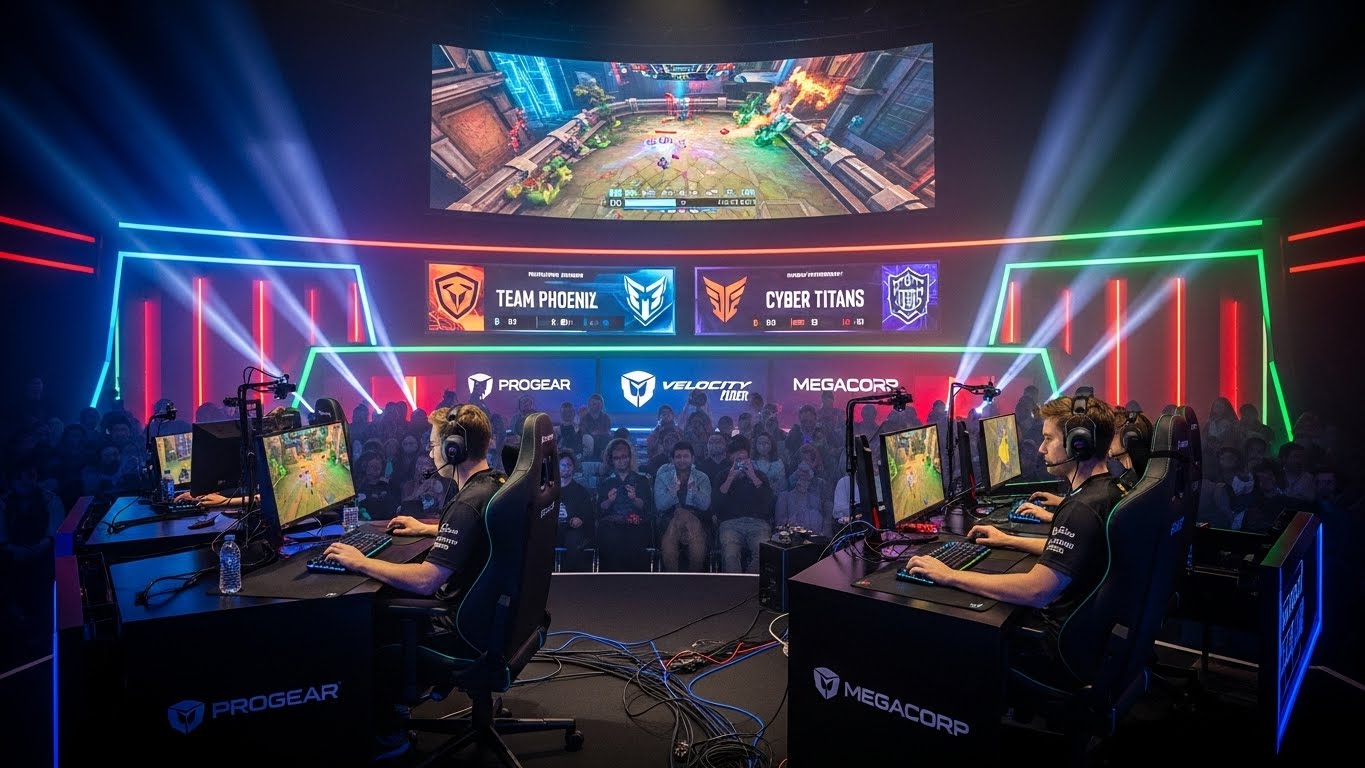
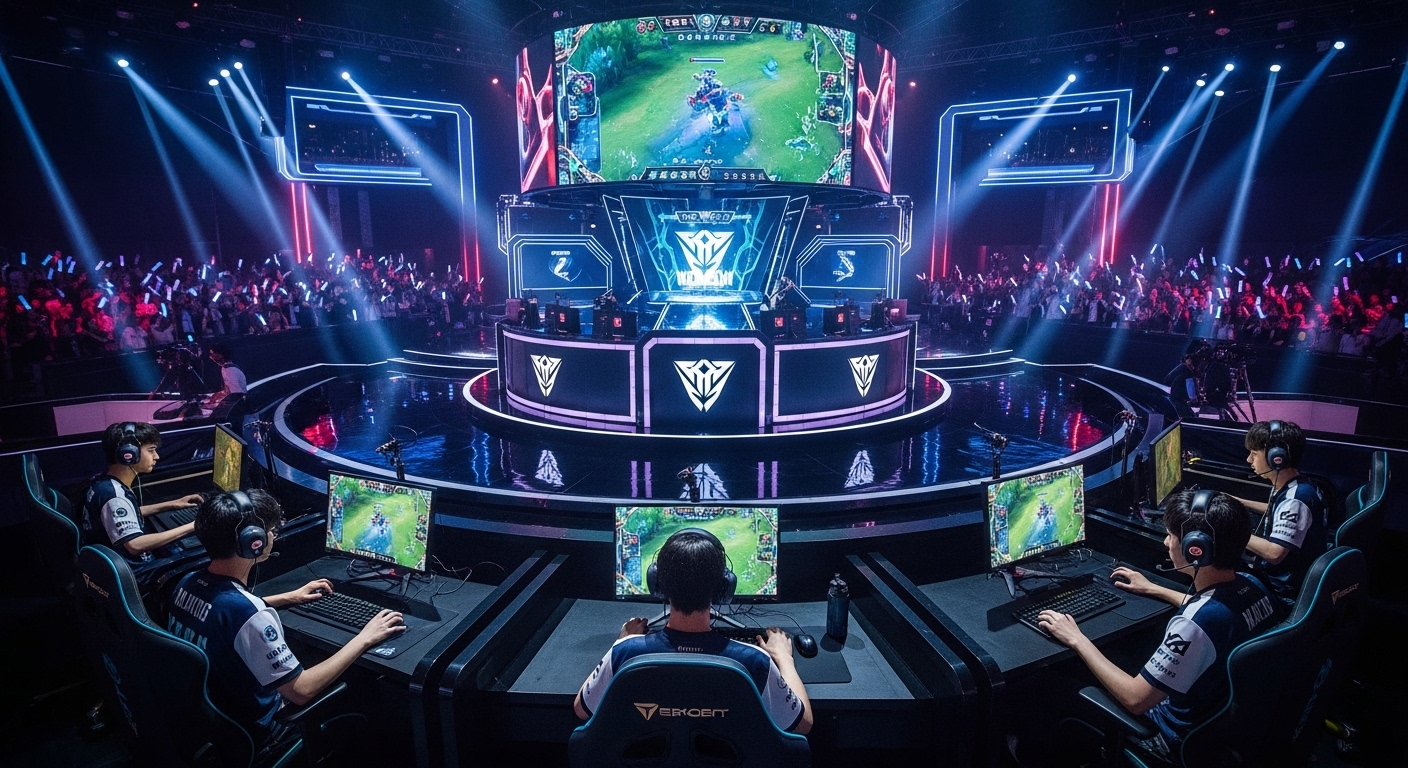
Gone are the days when gaming was confined to bedrooms. Today, Esports events fill entire stadiums. Cities like Seoul, Shanghai, and Los Angeles have dedicated Esports arenas designed to host massive tournaments.
The energy in these venues rivals that of any sports final. Fans wave banners, cheer for their favorite teams, and experience every play on gigantic LED screens. Professional casters narrate every move, turning gameplay into theatrical performance.
Events such as The International, League of Legends Worlds, and Overwatch League Finals have become cultural festivals, blending music, fashion, and technology into a singular experience.
Challenges Facing the Esports Industry
Despite its meteoric rise, Esports faces significant challenges. Player burnout, inconsistent regulations, and uneven global infrastructure remain pressing issues. The industry is still defining its governance, struggling to balance between developer control and independent league management.
Another challenge lies in maintaining fair competition. As with any sport, cheating, match-fixing, and performance-enhancing software threaten integrity. Developers and organizations must work continuously to ensure transparency and trust.
Additionally, the mental and physical health of players requires more attention. Long hours, irregular sleep, and online toxicity can lead to burnout. Initiatives promoting balanced lifestyles and psychological support are slowly emerging but remain underdeveloped in some regions.
Esports and Traditional Sports: A Symbiotic Rivalry
Initially dismissed by traditional sports purists, Esports has now gained recognition as a legitimate form of competition. Both worlds share striking similarities — strategy, teamwork, leadership, and fan engagement — even though one plays out on a digital field.
Interestingly, traditional sports organizations are now embracing Esports rather than competing with it. Many football clubs, basketball teams, and even Olympic committees are forming Esports divisions. This crossover blurs the line between physical and digital sports, paving the way for hybrid experiences.
As younger generations grow up with controllers instead of footballs, the future of sports will likely include both Esports and traditional athletics side by side.
The Cultural Influence of Esports
Esports isn’t just about gaming; it’s about modern culture. It influences fashion, music, art, and language. Esports-inspired clothing lines, soundtracks, and even movies now permeate mainstream media.
The culture surrounding Esports emphasizes individuality and creativity. Streamers and gamers express themselves through unique avatars, branding, and interactions with fans. This has given rise to digital celebrities with global influence, redefining what it means to be an entertainer in the 21st century.
Moreover, Esports has helped bridge generational gaps, as parents and children find common ground through games and tournaments they can enjoy together.
The Future of Esports: Boundless Potential
Looking ahead, the future of Esports appears limitless. Advances in virtual reality (VR), augmented reality (AR), and AI-driven gameplay will redefine how competitions are experienced. Viewers might soon step inside games through immersive technologies, blurring the line between player and spectator.
The continued integration of blockchain and Web3 technologies could revolutionize player ownership, digital collectibles, and fan engagement.
Mobile Esports will continue to dominate emerging markets, while mainstream media partnerships will bring Esports to television and streaming platforms worldwide.
In essence, Esports will become not just a pastime but a cornerstone of global entertainment — one that reflects the creativity and competitiveness of the digital age.
Conclusion: More Than a Game
Esports has come a long way from the flickering screens of the 1970s to the dazzling global tournaments of today. It stands as a testament to human innovation, community, and the desire to compete and connect.
It has transcended boundaries, united generations, and forged a new culture built on skill, creativity, and technology. Whether you’re a player, a fan, or a casual observer, Esports represents the future of entertainment — an ever-evolving, inclusive, and electrifying world where anyone, anywhere, can rise to the top.
In the grand narrative of human competition, Esports is not just the next chapter — it is the future itself.