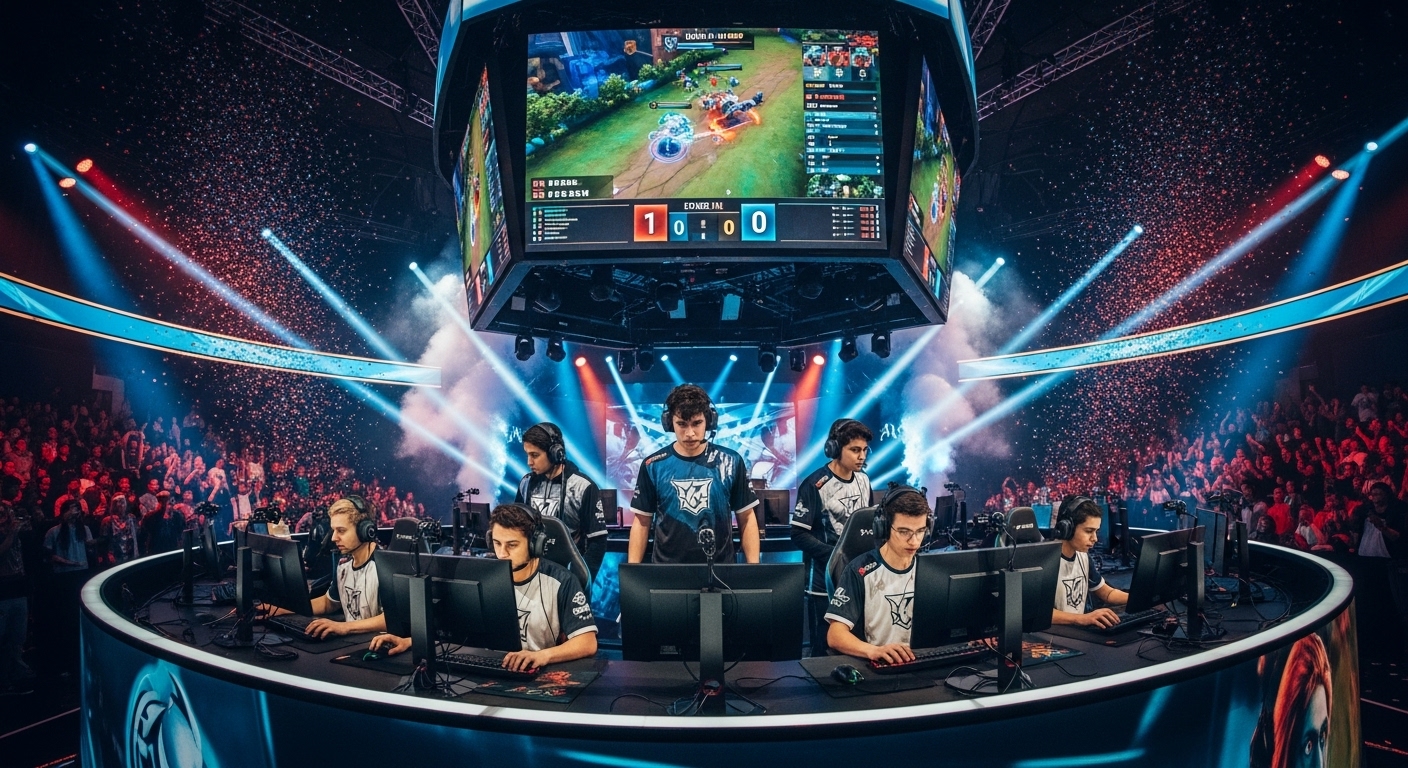
Esports, short for electronic sports, has rapidly evolved from a niche pastime into a global phenomenon. What once began as a small-scale competition among video game enthusiasts has now grown into a multi-billion dollar industry, attracting millions of fans, professional players, and sponsors worldwide. In this blog post, we will explore the rise of esports, its influence on the gaming industry, its impact on popular culture, and its potential future.
The Evolution of Esports
The roots of esports can be traced back to the early days of competitive gaming. In the late 1990s and early 2000s, video game tournaments were often held in local LAN (Local Area Network) centers or small venues. Popular titles like StarCraft and Quake were among the first games to gain traction in competitive circles, but it wasn’t until the advent of the internet that esports truly began to take off.
The turn of the century saw the rise of online gaming, which provided the infrastructure for large-scale competitive gaming. The launch of platforms like Battle.net and the rapid growth of online multiplayer games allowed players to compete in tournaments without needing to be physically present. Games like Warcraft III, Counter-Strike, and Dota became iconic within the esports community, setting the stage for what would become a global entertainment juggernaut.
In the mid-2000s, esports gained further momentum with the formation of organizations dedicated to competitive gaming. These organizations organized and hosted tournaments, which started to attract sponsorships, media attention, and a growing fan base. By the time League of Legends (LoL) was released in 2009, it had all the hallmarks of a mainstream esport. Riot Games’ title, with its regular updates and balanced gameplay, quickly became one of the most popular esports titles, setting the stage for a massive transformation in the industry.
The Globalization of Esports
What sets esports apart from traditional sports is its accessibility. Unlike conventional sports, where physical prowess often dictates success, esports allows players from all around the world, regardless of age, gender, or geographic location, to compete on equal footing. The digital nature of gaming also means that players can compete without needing to travel to distant venues, opening the doors for global participation.
The advent of streaming platforms like Twitch, YouTube Gaming, and Facebook Gaming also played a critical role in the globalization of esports. These platforms allowed players to broadcast their gameplay to millions of viewers, further popularizing esports. Gamers such as Ninja (Tyler Blevins) became household names, building large followings due to their entertaining content and skillful gameplay. The streaming culture helped esports transition from a competitive niche into a mainstream form of entertainment.
As esports grew in popularity, traditional sports organizations and companies took notice. Major sports networks like ESPN began broadcasting esports events, and well-known brands started sponsoring tournaments. One of the biggest milestones in this regard was when League of Legends’s World Championship attracted over 40 million viewers in 2019, surpassing the Super Bowl’s viewership. This shift from niche interest to mainstream entertainment solidified esports as an important player in the global entertainment industry.
The Economic Impact of Esports
The economic potential of esports is staggering. According to Newzoo’s 2023 Global Esports Market Report, the global esports market is expected to surpass $1.9 billion in revenue, driven by advertising, sponsorships, media rights, and merchandise sales. The growing audience for esports events has attracted big brands from industries like technology, automobile, and even fashion, all eager to capitalize on the booming market.
One of the most significant drivers of the esports economy is sponsorship. Companies are increasingly willing to invest millions in esports teams and tournaments because of the growing reach of these events. Esports tournaments such as The International (Dota 2), League of Legends World Championship, and Overwatch League offer massive prize pools, attracting top players and teams from all corners of the globe. These sponsorships are not only lucrative for the players but also for the organizations and broadcasters involved in bringing esports to a wider audience.
The financial success of esports is also reflected in the emergence of professional esports leagues. These leagues, similar to traditional sports leagues like the NBA or NFL, offer stable salaries, career progression, and long-term contracts for players. The Overwatch League (OWL), for example, created a model where cities across the world fielded professional teams, creating a team-driven, city-based rivalry system.
The Role of Esports in Popular Culture
Esports has had a profound impact on popular culture, bridging the gap between gaming and mainstream entertainment. Professional gamers are now seen as celebrities, with millions of fans tuning in to watch their every move both on and off the gaming stage. Esports influencers on platforms like Twitch and YouTube have cultivated massive followings, and their personal lives, skills, and opinions hold significant influence in the gaming community.
Streaming has also helped transform esports into a spectator sport. Just as fans watch traditional sports to enjoy the thrill of competition, esports enthusiasts watch their favorite players and teams compete in fast-paced, high-stakes tournaments. The excitement of watching live gameplay, combined with the personalities of the players, creates a unique form of entertainment.
The influence of esports extends beyond the gaming world into music, fashion, and even film. Artists like Imagine Dragons and The Chainsmokers have collaborated with esports organizations, producing music specifically for esports events. Fashion brands have also recognized the popularity of esports, with streetwear lines and esports merchandise selling out in minutes during major events.
Esports has become a cultural phenomenon in much the same way that other global entertainment industries, such as professional wrestling or the movie industry, have. It brings together millions of people from different backgrounds who share a passion for gaming and competition, forming a global subculture that spans age, gender, and nationality.
The Challenges Facing Esports
Despite its immense growth, esports faces several challenges as it continues to expand. One of the most significant issues is the sustainability of player careers. Many professional players start their careers at a young age, often in their teens, and can face burnout after just a few years due to the intense pressure and commitment required. The physical toll of playing for extended periods, including repetitive strain injuries, has also become a concern for players’ health.
Another challenge is the regulation of the esports industry. As the industry grows, there is a need for clearer governance and ethical guidelines surrounding issues like match-fixing, doping, and player behavior. Esports has been criticized for its lack of consistency in rules and regulations, which can lead to unfair practices and tarnish the reputation of the sport. For the industry to continue its growth trajectory, it will need to establish more robust systems for managing these concerns.
Esports is also heavily reliant on digital infrastructure, and any disruptions to online platforms or networks can have a significant impact on tournaments and events. For example, a server crash during a major tournament or a DDoS attack can ruin the experience for players and viewers alike. This reliance on digital technology requires constant vigilance to ensure that the esports ecosystem remains stable and secure.
The Future of Esports
Looking ahead, the future of esports appears incredibly promising. With advancements in virtual reality (VR), augmented reality (AR), and artificial intelligence (AI), esports could soon evolve into even more immersive and interactive experiences. The introduction of VR and AR could create new ways for fans to experience live tournaments, while AI could revolutionize the way games are played and analyzed.
Esports could also benefit from greater integration with traditional sports. As more sports leagues look to integrate esports into their offerings, we may see hybrid events that blend physical sports with digital competition. We are already seeing sports organizations like the NBA and Formula 1 exploring esports as a complementary aspect of their brand.
Moreover, the continued growth of esports in emerging markets such as China, India, and Latin America will help cement its place as a global industry. With a young, tech-savvy population and increasing access to high-speed internet, these regions are primed to become key players in the future of esports.
Conclusion
Esports has come a long way since its humble beginnings. Today, it stands as a global powerhouse in the entertainment industry, attracting millions of fans, players, and investors. As technology advances and new opportunities arise, the potential for esports to grow even further is vast. While challenges remain, the future of esports is bright, and it is clear that competitive gaming is here to stay as a major part of global culture and entertainment.
As esports continues to evolve, we can expect even more exciting developments, from new gaming platforms to new forms of fan engagement. Whether you’re a casual gamer or a die-hard esports enthusiast, one thing is certain: the world of esports is only just getting started.